
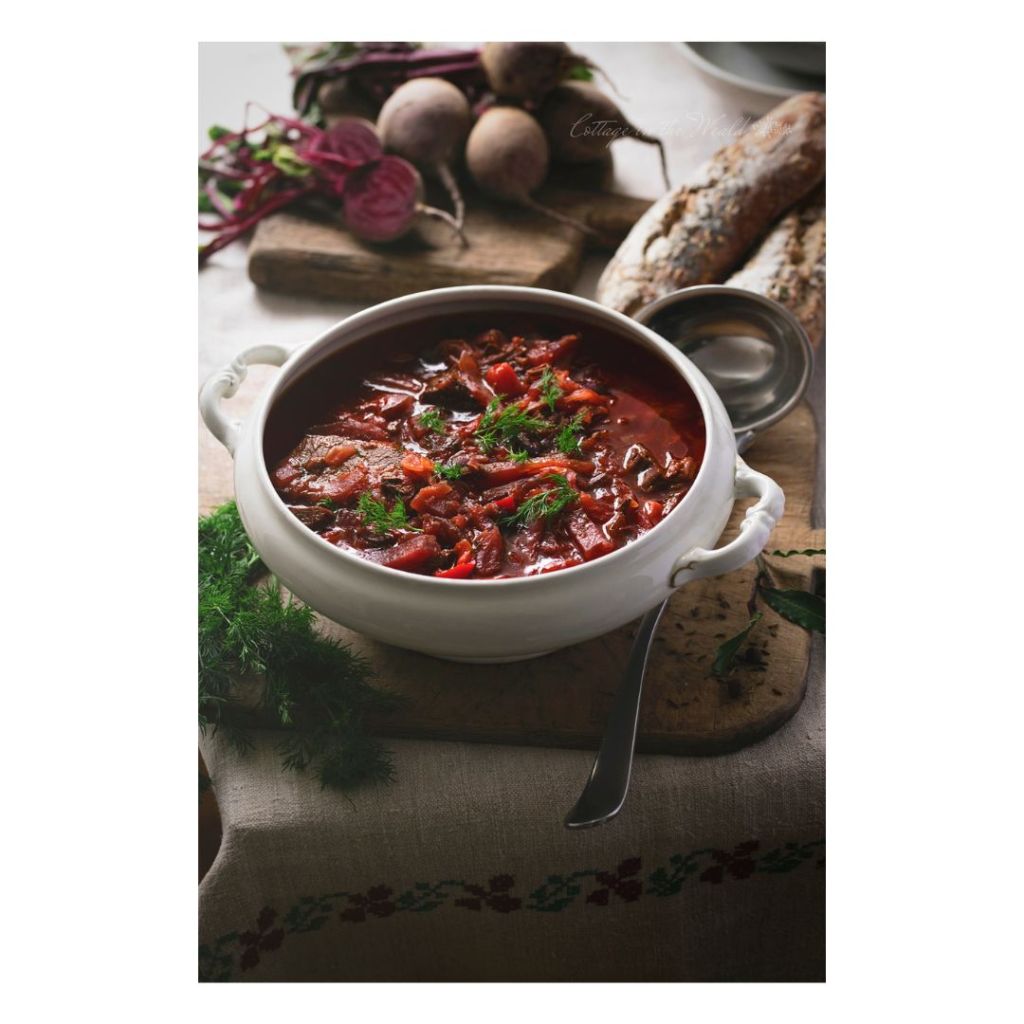
Comforting & filling beetroot & beef stew, that I could call a Ukrainian treasure pot. As we share a part of borders with Ukraine, there’s no wonder this treasure pot has become a staple on our tables, too.

I mostly remember eating borscht at two places when I was little – school dinners or in Naháč. One lighter, more of a vegetable soup with some meat, the other richer, much heartier meat stew, but both strongly flavoured and coloured with sweet beetroot.
Borscht has it all – it’s sweet, it’s sour, it’s umami enough to leave you completely satisfied and come for more soon. It offers choice of meat and garden produce that nurture you and pull you through a lot of murky days.
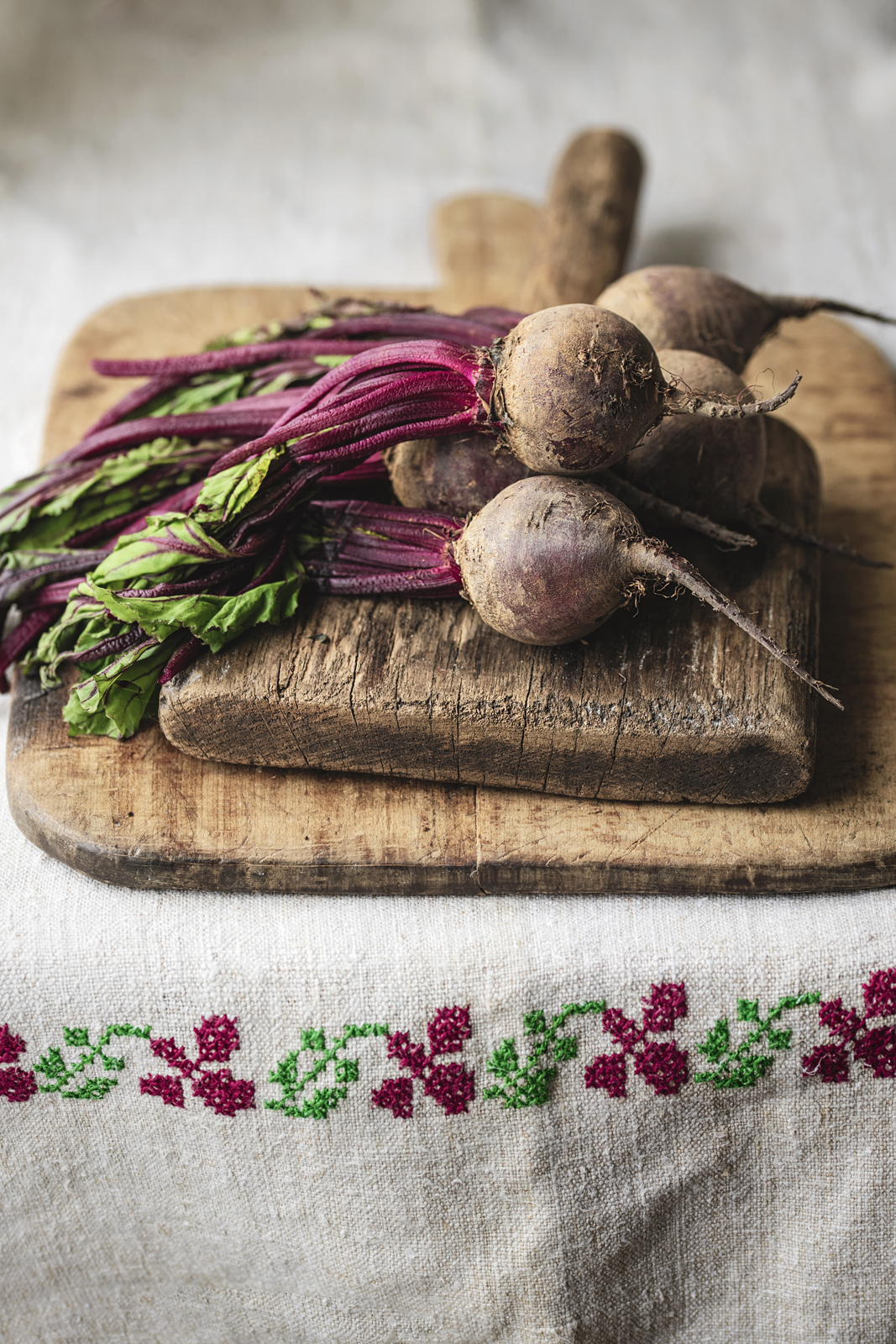
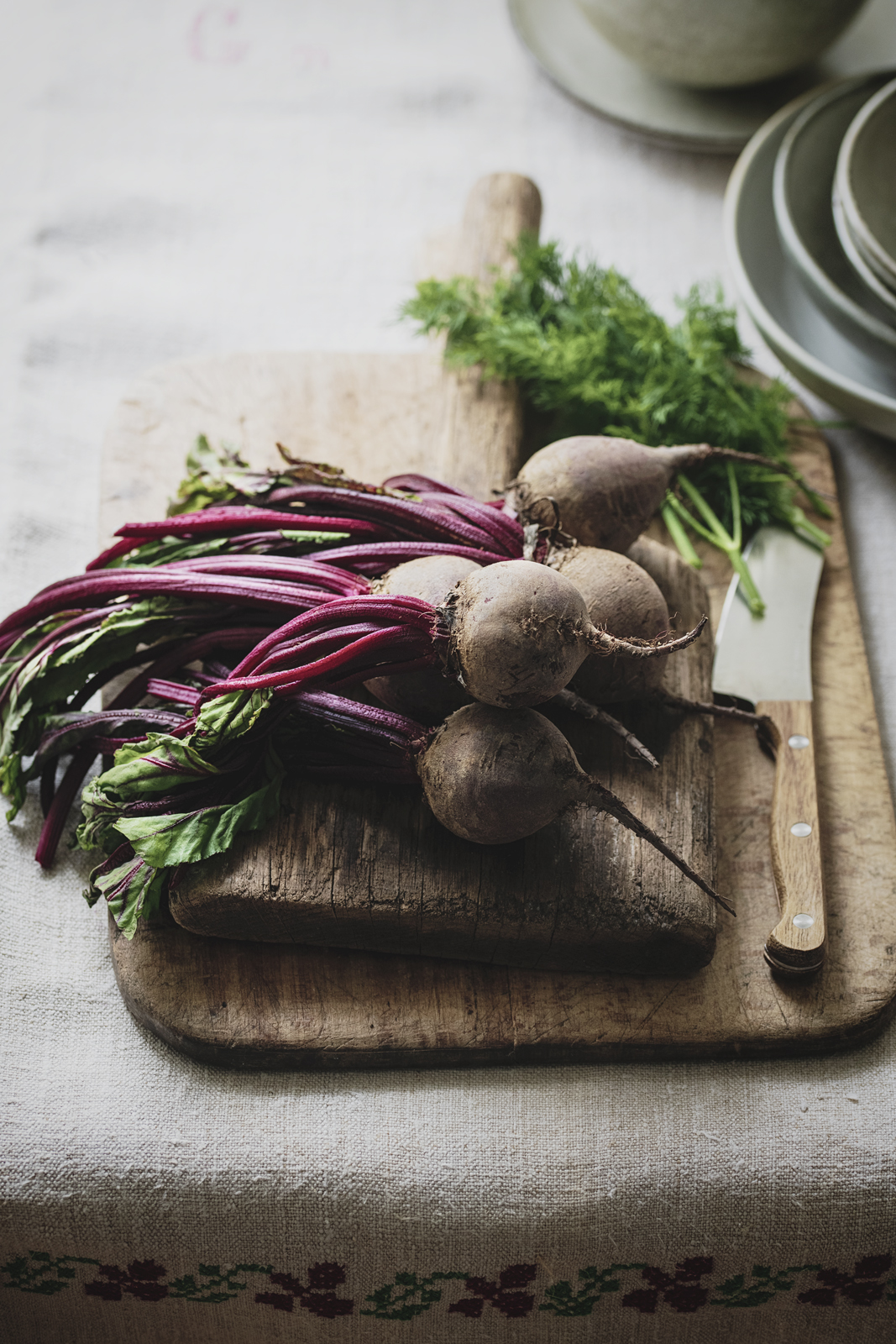
In this recipe I used a couple of new ingredients, inspired by Olia Hercules’ (Mamushka, 2015) version of this pot of gold, or ruby if we strictly think colours, where she adds red kidney beans and red pepper and uses oxtail for the stock.
We would use both pork & beef meat for the stock base, although it was pork more often than not, using cuts as pork leg or shoulder, beef short ribs, brisket or beef shin močing on or off bone, or even duck meat as my babka did sometimes, cooked all slowly and long together with vegetables. In our version I also haven’t seen any beans or pepper being used.
I, however, loved this idea, the beans simply make it even more voluminous and pick on the red hues visually.
Boršč stew would be always served with a generous dollop of soured cream kyslá smotana and a good sprinkle of chopped fresh dill kôpor when available.
Borscht – I could call it a Ukrainian treasure pot.
Take your time to prepare the stock base, as it is a very important foundation of the dish. It is the beetroot pieces and their distinctive colour that it’s so famous for but the stock is the base of the pyramid that this stew stands firmly on. It takes a while for the meat to cook well, as we say until it falls off the bone, or is so soft it can easily be pulled into pieces by fork or spoon.
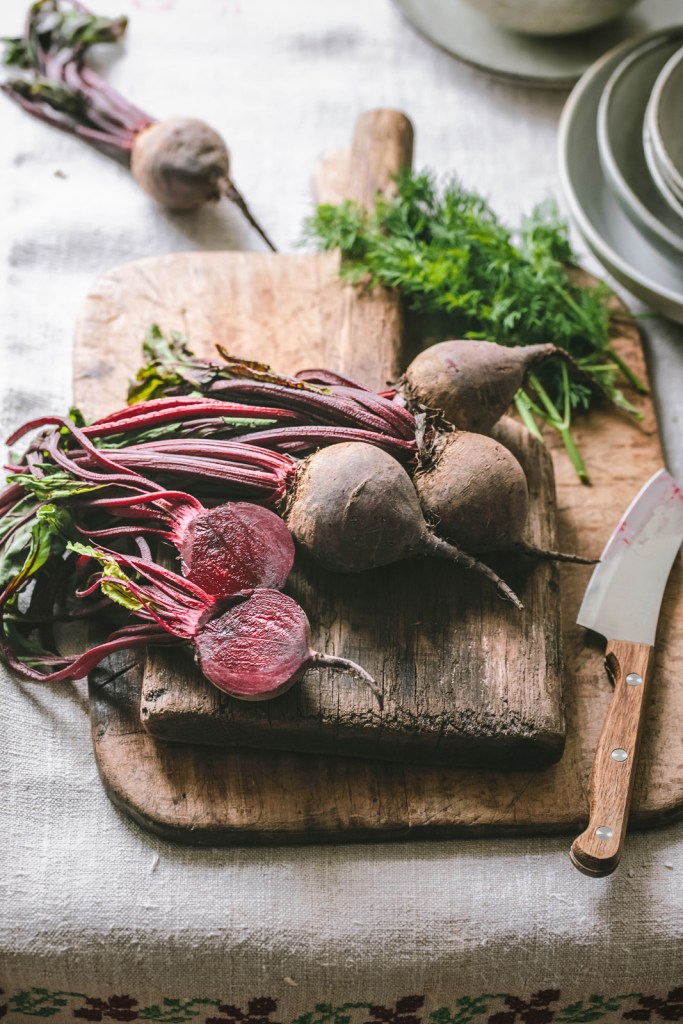
Think ahead, however, as you’ll be building up the stew gradually, so keep an eye on that softness, and when the meat is nearly done, that would be the time to sort the stock and add the rest of the ingredients.
This is not the fastest of dinners but keeping the stock in the fridge a day (or two) before you make the stew, could easily give you a good time ahead for this absolute comfort well of goodness in the middle of the week. While your stock heats up on the stove, just prepare the rest.
Alternatively, prepare borshch one day, let set in the fridge till the next day – the flavours deepen, and some swear by it being even more tasteful the next day.

Beetroot & Beef Boršč – Borscht
Ingredients:
Stock base:
- 500 – 750 g beef short ribs, or osso buco, or shin on or off bone or beef skirt
(*or duck legs & breast, with bone, excess fat & skin trimmed off)
- 2.5 – 3 litres cold water
- 1 onion, whole, peeled
- 1 carrot, whole, peeled
- 2 celery sticks, washed
- 1 bay leaf
- 5 whole allspice
- 1 tbsp salt
* if you go for the duck meat alternative, keep the fat & fatty skin pieces for later, use
them diced under roasting potatoes, or slowly melt & shallow fry on low heat, once
all skin is shrunk, crisp and golden brown, fat translucent, carefully pour into a ceramic
ramekin or glass jar,
let cool completely and keep for further use e.g. roasting potatoes or meats
Borscht stew:
- 3 tbsp sunflower oil
- 1 onion, peeled, finely chopped
- 1 carrots peeled, roughly grated or diced
- 350 g red beetroots, peeled, diced or cut into thicker matchsticks
- 1 red pepper, deseeded and chopped
- 420 g tin chopped tomatoes
- 1 tbsp tomato purée
- 350 g white cabbage, de-cored, leaves shredded
- 3 tbsp red wine vinegar or apple cider vinegar
- 3 tbsp demerara sugar
- 100 ml white wine
- 1 tsp roughly crushed caraway seed
- 1 tsp freshly ground black pepper
- stock and cooked meat for the base
- 420 g tin red kidney beans, drained and rinsed
- salt to taste
To serve:
- 1 dollop soured cream to serve per plate
- fresh dill leaves, finely chopped, serve to taste
- fresh bread
Method:
In a large pot bring water with the meat cut in to boil, then lower the heat and let simmer very gently. Meanwhile peel the onion, carrot, wash and trim celery sticks if needed. Once the white scum foam from the cooking meat appears on the surface of the water, skim it off with a small sieve, you may need to repeat this for a few times until the water cooks as clear possible.
Add onion, carrot, celery sticks, bay leaf, allspice berries, salt into the pot and keep cooking on a very low heat for about two hours, or more, until the meat is nearly done and soft.
You don’t need it cooked completely at this stage, as it will still cook for a while with the vegetables.
When the stock is done, discard the bay leaf, allspice, and vegetables, then pour stock carefully through the larger sieve into another pan to keep ready to use for the stew. Keep the meat with the stock.
To start the borshch stew heat oil in a pan, add and gently fry onion and carrot until they soften, then add beetroot, pepper, tomatoes, tomato purée, cabbage, vinegar, sugar, wine, caraway seed and pepper, stir well and let all the ingredients combine together, let them heat through and cook off some of the wine, then add stock and meat to the pot to slowly cook all for further 45 mins until the beetroot and cabbage soften completely. Check the meat too. You don’t want the stew bubble away too fast but rather simmer lightly or very little for longer.
Add the kidney beans, stir again and cook on low heat for another 10 mins or until you are happy with how soft the meat is.
Serve with a dollop of soured cream, chopped dill and fresh or toasted bread or rolls.

I usually crave borscht in colder months, it’s so hearty and comforting, and while it gently simmers on the cooker, the kitchen is always filled with that lightly sweet & sour aroma of the beets cooking with meat, that I find just as comforting in the sense of the anticipation of that warming, filling meal.
 cottage in the weald